


A day outdoors can go from relaxing to inconvenient with surprising speed. A twisted ankle can turn a short hike into a slow walk back. A dead phone can make a simple change of plans harder. A sudden rainstorm can leave an unprepared group cold, wet, and wishing someone had remembered the extra layer.
That does not mean every weekend hike requires a giant backpack filled with survival equipment. A practical emergency kit is smaller and more useful than that. The goal is to carry a few reliable items that address common problems without turning your pack into a traveling storage closet.
The best kit is one you know how to use, check regularly, and actually bring with you.
Start With the Basics
Before adding specialized equipment, cover the fundamentals: communication, light, first aid, water, food, warmth, and navigation.
A compact flashlight or headlamp is useful even when you expect to return before sunset. Batteries can fail, hikes can take longer than planned, and trail conditions can slow everyone down.
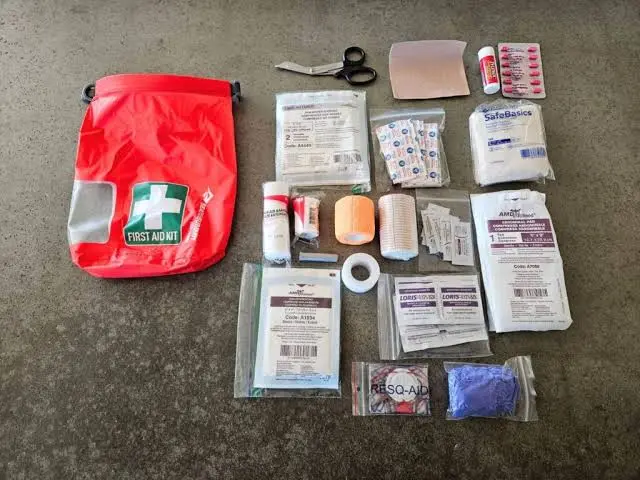
A small first-aid kit should match the type of activity you are doing. Basic supplies can include adhesive bandages, gauze, medical tape, antiseptic wipes, blister treatment, gloves, and any personal medication you may need. For longer or more remote outings, additional supplies may make sense.
Water deserves special attention. Carry enough for the planned activity and conditions, with additional capacity when practical. A compact water filter or purification method can provide another option during longer trips, but it should be considered backup equipment rather than an excuse to carry too little water.
Pack for the Environment
An emergency kit for a wooded day hike will look different from one used for desert camping, winter snowshoeing, or a paddle trip.
Think about what the environment can do to you and what it can do to your equipment.
Rain can soak clothing and electronics. Cold can reduce battery performance. Heat increases the importance of hydration. Rough terrain can create problems for footwear and exposed skin. Bugs can make an otherwise pleasant evening miserable.
A lightweight emergency blanket, waterproof matches or another appropriate fire-starting option, rain protection, and a spare layer can occupy little space while providing useful backup if conditions change.
Keeping vulnerable items in waterproof bags or pouches adds another layer of protection. Zip-top bags can work for small items, while dedicated dry bags may make more sense around water.
Make Communication Part of the Kit
Your phone is useful, but it should not be your entire emergency plan. Download maps before leaving an area with unreliable reception. Carry a charging cable and compact power bank, and consider a backup communication device for trips that take you far from reliable cellular coverage.
Before heading out, tell someone where you are going, what route or area you expect to use, and roughly when you plan to return. That simple habit gives another person useful information if your plans change unexpectedly.
For remote adventures, the right communication equipment depends on the location and activity. Research the options before you need them.
Keep Food Simple
Emergency food does not need to become a gourmet project. Choose compact items that tolerate being carried around. Energy bars, trail mix, dried fruit, crackers, and other shelf-stable foods can provide useful calories if an outing lasts longer than expected.
Pack at least a little more than the exact amount required for your planned activity when conditions allow. Delays happen. So do wrong turns, slow companions, mechanical problems, and scenic detours that somehow turn into an extra three hours.
The same principle applies to water: build your supplies around realistic conditions rather than the shortest possible version of the trip.
Add Personal Safety Equipment Carefully
Outdoor preparedness sometimes includes equipment that goes beyond first aid and food. The key is to keep every item connected to a legitimate need.
Whistles can attract attention without draining a battery. A signal mirror can be useful in some environments. Trekking poles may provide stability on difficult terrain. Gloves can protect hands during work around camp or rough surfaces.
For lawful firearm owners, a firearm may be one component of a broader personal-safety plan, but it should never replace basic preparation, communication, first aid, or sound judgment. Safe storage, responsible handling, and compliance with applicable laws remain essential.
For those who lawfully own a compatible handgun, ammunition selection is another small equipment consideration. People may research options such as bulk 9mm ammo based on availability, reliability, recoil characteristics, and how a particular load performs in their own firearm. Any ammunition intended for serious use should be tested safely with the actual firearm and magazines rather than assumed to work because of a label or marketing claim.
Build a Kit You Will Actually Carry
A perfect emergency kit that stays at home is less useful than a modest kit that comes along on every adventure.
Start with a small pouch or container that keeps essential items together. Organize it so the items you are most likely to need are easy to reach. There is little value in having a flashlight if it is buried underneath clothing and cooking equipment.
Avoid packing five versions of the same tool while overlooking basics. A few dependable items are generally easier to inspect and maintain than a sprawling collection of gadgets.
It can also help to create separate kits for different activities. A small day-hike pouch may be enough for local trails, while overnight camping, backcountry travel, or water-based activities may justify additional equipment.
Test Before You Trust It
Emergency equipment should earn its place in your pack. Turn on the flashlight. Check the batteries. Inspect the first-aid supplies. Confirm that food has not expired. Test the water-treatment equipment according to its instructions. Make sure the power bank is charged.
Practice using unfamiliar equipment before an emergency occurs. Reading instructions while cold, tired, or stressed is a poor time to discover that a device requires an extra component.
Review the kit at the start of each season and after every major trip. Replace damaged, expired, or depleted supplies.
The Goal Is Confidence, Not Clutter
An emergency kit does not need to look impressive. Its job is to make ordinary problems easier to handle.
A flashlight solves a lighting problem. A first-aid kit handles minor injuries. Extra water buys time. A power bank keeps communication available. A rain layer can turn a miserable delay into an inconvenience instead of a crisis. That is practical preparedness: fewer gadgets, more useful habits.
Outdoor adventures are supposed to leave room for curiosity, fresh air, and a little unpredictability. You cannot eliminate every surprise, and you do not need to. Pack for the conditions, carry a few sensible backups, and know how your equipment works. The smartest emergency kit may be the one you barely notice until the day it matters.