


Typically, a person wastes roughly 5 to 10 litres of water in case you leave the tap running for only two minutes! At the same time, the same quantity of water gets wasted while waiting for hot water.
But the actual quantity is contingent upon the distance between the geyser and your tap and the water flow.
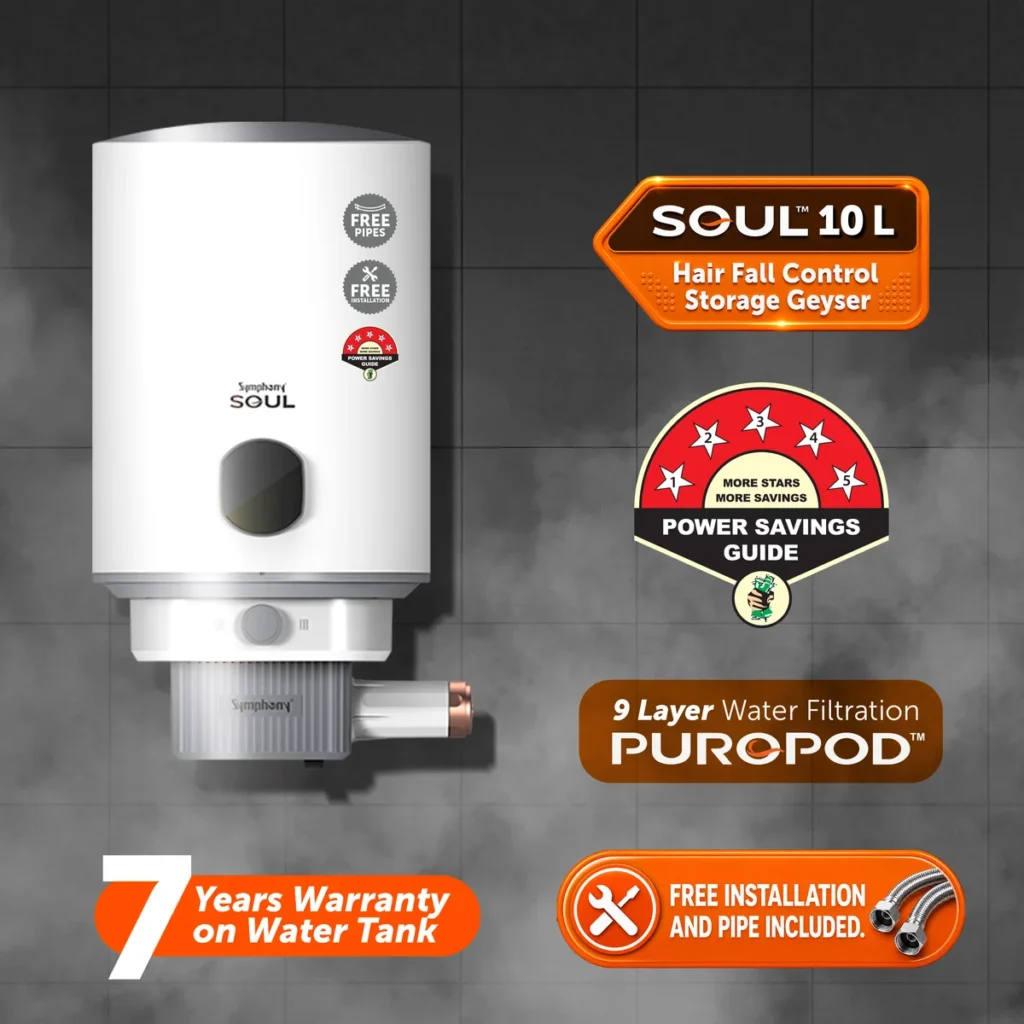
A water geyser installed closer to your bathroom tap can help reduce this wastage. Symphony offers options like the SPA and SOUL storage geysers for Indian homes.
But remember that even a good electric geyser cannot prevent water wastage if the hot water has to travel through long pipes.
Why does water get wasted while waiting for hot water?
Ever turned on the tap in the bathroom for hot water to come out? The water that rushes out for the first few seconds is typically cold. You may have to allow it to flow into the drain till the desired temperature is achieved by the geyser.
Have you ever deliberated why this occurs? The reason is that certain water remains inside the pipes once you switch the tap off.
As time goes by, this water loses its heat. Hence, the next time you switch on the tap, this cooled water comes out initially before the freshly heated water rushes out of the tap.
Suppose your geyser is installed at a considerable distance from the shower. In that case, more water may remain inside the connecting pipe. As a result, you might have to wait longer for hot water.
There is another thing worth considering. A larger pipe can hold more water compared to a smaller one of the same length. Hence, the pipe size also affects the quantity of water that comes out before the hot water arrives.
The type of geyser you purchase is important. But the distance between the geyser and the bathroom tap can make a colossal difference in decreasing the wastage of water.
How much water do you waste while waiting for hot water?
You may not pay much attention to the water flowing down the drain while waiting for your geyser to supply hot water. But have you ever thought about how much water gets wasted in this process every day?
Let us assume that your bathroom tap releases around 6 litres of water every minute. In case you leave it running for two minutes, approximately 10 litres of water will go down the drain.
Now, suppose four members of your family follow the same habit every morning. In that case, the total wastage can reach 48 litres in a single day. Over 30 days, this amounts to approximately 1,440 litres of water.
However, these figures are only estimates. The actual wastage depends on your tap’s water flow and the time you spend waiting for hot water.
There is another thing you should understand before purchasing a geyser for bathroom use. A higher geyser price does not necessarily mean that the appliance will help you save more water.
Even when you buy an exorbitant model, it may still result in wastage of tap water because the hot water needs to travel through a long pipe.
How can you reduce water wastage in your bathroom?
How surprising it is when you learn that the water flowing out of your tap can still come in handy while you wait for the hot water. Yes, it is true! Rather than allowing the water to go down the drain, you can accumulate the water using a bucket.
If you require roughly two minutes for the hot water to reach your bathroom tap. While the time happens, you can accumulate the cold water and use it for flushing the toilet or washing the floor.
There is absolutely zero need to use fresh water for such chores when the accumulated water can do the same thing.
But what if the water comes out of your tap at a very high speed? In that case, you may consider getting a flow regulator installed. It helps control the quantity of water coming out of the tap.
Another thing worth checking is the condition of your hot water pipes. In case these pipes are not insulated, the water may lose heat while travelling towards your bathroom. With the help of proper insulation, you can decrease the loss of heat.
Does Selecting the Appropriate Geyser Assist in Decreasing the Water Wastage?
Certain people think that buying a new geyser would automatically decrease the water wasted in your bathroom. But that is not always the case. A lot depends on where the geyser is installed and the amount of hot water your family requires.
Suppose five people in your home use the same bathroom every morning. In such a situation, a storage geyser with a larger tank may be useful. It can hold more heated water for your family members to use.
But does that mean you should purchase a 25 litre model? Not necessarily. The very first thing that you must consider is the amount of hot water each person needs.
You can then compare the 25 litre geyser price with smaller models to determine whether the extra capacity is best for your requirements.
There is another thing you should know. This is where an energy efficient geyser is perfect to save electricity. But it does not always prevent water from flowing down the drain while you wait for the water to heat up.
Before you make the final purchase of a home geyser, take a closer look at the distance between the appliance and the bathroom tap. Even if you get a geyser with a larger tap, it will not help in removing the water that remains inside long pipes.
Conclusion
Ever calculated the quantity of water your family wastes while waiting for a hot shower?
You may not find this alarming at first because it may be only a few litres of water. But imagine the total quantity getting wasted over an entire month. It can be much more than you would expect.
In case you are thinking about purchasing a home water geyser, consider where you will install it. A shorter distance between the geyser and your tap may help you save water that would otherwise go down the drain.
There is no point in spending more money on a larger geyser if your family does not require that much hot water. Before getting one, get your bathroom pipes repaired if you are using it for a pretty long time.
Keep this in mind: Selecting the appropriate geyser is only a part of decreasing water wastage. Your daily habit of accumulating cold water rather than enabling it to drain can also make a vital difference of positive change.