


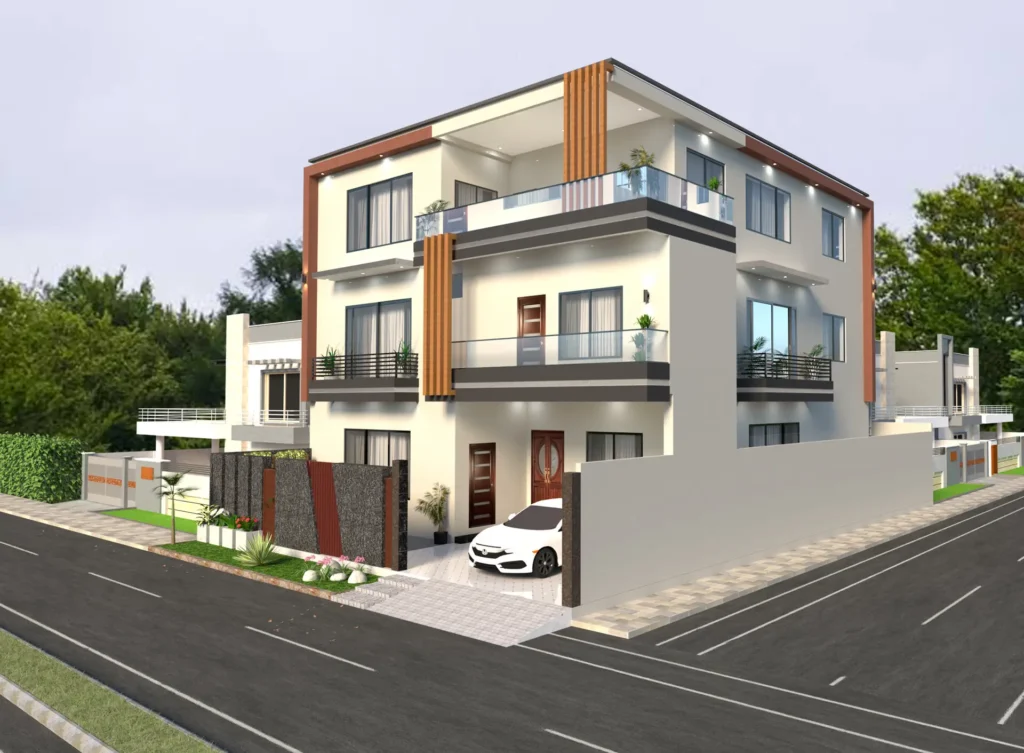
Owning a corner plot is a bit of a luxury. You get more light, better ventilation and a street presence that mid-terrace homes can only dream of. But there is a catch: two sides face the road, which means two facades are on show all day, every day. Get the design wrong and one side looks like an afterthought. Get it right and your house becomes the one people slow down to admire. A good 3D elevation design lets you see exactly how both faces work together before a single brick is laid.
Treat Both Facades as One Composition
The biggest mistake on corner plots is designing a “front” and then simply repeating or neglecting the “side”. Instead, think of the house as a single sculpture viewed from a moving car or a passing walker. Choose a common palette of textures, paint tones and cladding, then vary the proportions on each side so neither feels like a copy. For instance, a stone-clad feature wall on the main face can be echoed by a slimmer stone band on the return elevation. Rendering the whole home in 3D helps you spot lopsided massing early, long before it becomes an expensive correction.
Place Windows to Add Rhythm, Not Randomness
Windows do most of the heavy lifting on a corner elevation. Because two walls are visible at once, their placement should create a steady visual rhythm. Align sill and lintel heights across both sides, and keep similar proportions even when sizes differ. A large picture window facing the primary road can be balanced by a tall, narrow vertical window on the side, which also keeps interiors well lit without sacrificing privacy. Corner windows, where glazing wraps around the angle, are another smart trick. They soften the sharp edge of the building and flood the living room with daylight from two directions.
Let Balconies and Entrances Do the Wrapping
A wraparound balcony is arguably the hero feature of any corner home. It links both facades with one continuous horizontal line, adds usable outdoor space and creates handsome shadow play through the day. Pair it with glass or slim metal railings for a light, modern look, or timber-finish detailing for something warmer. The entrance deserves equal thought. Placing the main door near the corner, perhaps beneath a cantilevered canopy, gives the house a natural focal point visible from both roads. If the door sits on one side, a landscaped path or a feature light on the other keeps that face from feeling blank.
Why Good Corner Design Adds Character and Value
Picture two similar houses on corner plots. One has a flat, boxy side wall with a single small window. The other uses a wraparound balcony, a textured accent panel and a corner-facing entrance. The second home will almost certainly photograph better, feel more spacious inside and attract stronger interest from buyers or tenants. Curb appeal has a real impact on perceived worth, and corner properties have twice the opportunity to make that impression. Thoughtful detailing also tends to age well, so the home keeps looking current for years rather than needing a facelift.
Final Thoughts
Designing for a corner plot is less about adding more and more about connecting things well. Keep a unified palette, give your windows a consistent rhythm, let a balcony or entrance tie both sides together, and review everything in three dimensions before construction begins. Do that, and both facades will earn their place on the street, giving your home character you will enjoy daily and value that stands out when it matters.