
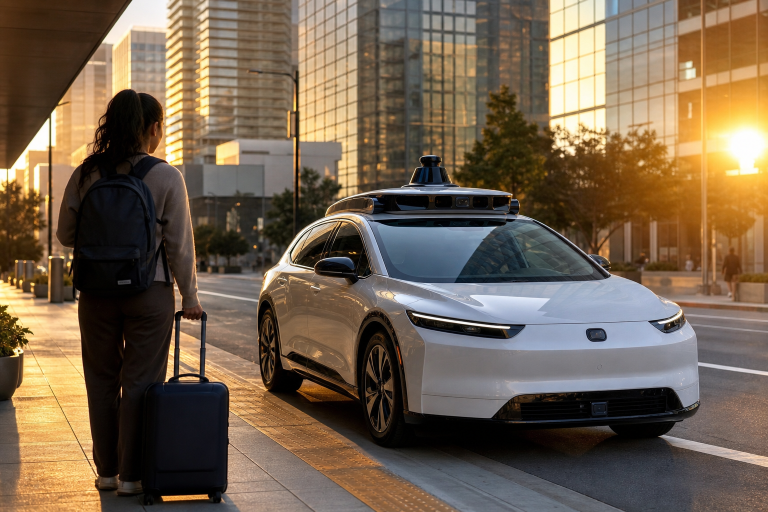
Key Takeaways
- Driverless rides offer convenient transportation in selected areas.
- Check safety, fares, accessibility, and service limits before booking.
- Robotaxis can support first-mile and last-mile transit connections.
- Cities must manage curbs, traffic, emergencies, and privacy.
- Clear communication and reliable support help build public trust.
Driverless ride services are moving from a futuristic idea into a practical transportation option in selected cities. For travelers, the question is not simply whether a vehicle can drive itself. It is whether the service is safe, affordable, accessible, and useful for an everyday trip across town. As self-driving taxi companies, such as Zoox, and other providers expand carefully defined services, riders and city leaders need a clear way to assess what these trips can do well, where they still have limits, and how they should fit alongside walking, biking, buses, and trains.
What Are Driverless Ride Services?
A driverless ride service uses an automated driving system to operate a vehicle without a human driver behind the wheel during an approved trip. These vehicles use a combination of cameras, radar, lidar, detailed maps, computing systems, and software to interpret the road and make driving decisions. It is important not to confuse a driverless service with features found in many consumer vehicles. Driver assistance can help with braking, lane positioning, or speed, but the person in the driver’s seat remains responsible. Supervised automation still expects a human to take over when needed. A fully driverless ride differs in that passengers are not expected to drive the vehicle. The federal levels of driving automation help explain why those distinctions matter. Even a driverless service is not designed to operate everywhere. Providers typically limit trips to a defined service area and may restrict operation on certain roads, in severe weather, near unusual construction, or during particular hours. Local approval processes and operating rules can also vary widely from city to city.
How A Driverless Ride Works
For most riders, booking a driverless trip looks similar to booking any app-based ride, although the pickup process may be more structured.
- Open the approved ride service app and enter your destination.
- Choose a pickup point inside the service area.
- Review the vehicle details, estimated arrival time, and fare.
- Confirm that the correct vehicle has arrived at the curb.
- Follow the in-vehicle instructions and fasten your seat belt.
- Use the support feature if the vehicle pauses or you need assistance.
- Exit only when the vehicle has stopped at the approved drop-off point.
A vehicle may ask riders to meet at a specific pickup zone rather than stopping anywhere on a crowded street. That can reduce conflicts with buses, bike lanes, crosswalks, delivery vehicles, and moving traffic. It can also give the vehicle a safer, more predictable place to pull over and reenter the travel lane.
Where They May Help Most
Autonomous rides may be most useful when a short, direct trip is difficult to make through regular transportation. Possible uses include trips between homes and rail stations, late-night travel after transit service slows down, airport connections, large event areas, and first-mile or last-mile travel in spread-out neighborhoods. Consider a rider who lives two miles from a train station. A driverless ride could make the station easier to reach during rain, when carrying groceries, or before an early shift. That may support transit use. Still, the ride should not be treated as a replacement for frequent, reliable buses and trains that can move many people at once.
Safety And Rider Trust
Passengers naturally want to know how a vehicle will respond to people walking, cyclists, roadwork, emergency vehicles, temporary lane closures, and unclear traffic patterns. Automated systems are built to detect and react to many of these conditions, but real streets contain unusual situations that are difficult to predict perfectly. When a vehicle encounters something it cannot confidently handle, it may slow down, pull over, stop, or request remote support. Riders should be able to contact customer service through the app or an in-vehicle support feature. They should also receive clear instructions if a trip is delayed, rerouted, or ended early. Trust should not depend on claims that autonomous travel is risk-free. It grows when operators share meaningful safety information, regulators can investigate incidents, and cities have clear procedures for responding to problems. Careful testing, transparent reporting, and independent oversight matter as much as the technology itself.
What Cities Need To Plan For
Driverless rides affect more than the passengers inside the vehicle. They can change how curbs are used, where vehicles wait, how traffic moves near stations, and how emergency crews access a street. City leaders need plans that protect the people already using public space.
- Designated pickup and drop-off zones that do not block bus stops or bike lanes.
- Rules for vehicles that stop unexpectedly or obstruct travel lanes.
- Reliable communication with police, fire, and emergency medical teams.
- Safe access for pedestrians, cyclists, delivery workers, and transit riders.
- Data-sharing standards that protect personal information.
- Clear procedures for breakdowns, road closures, and special events.
Recent city transportation guidance on preparing for robotaxis emphasizes that local governments should set transportation goals first, then determine how new services can meet those goals. Curb space needed for buses, accessible loading, cycling, and walking should not be treated as spare space by default.
How They Could Connect With Public Transit
Potential Benefits
- Convenient connections to rail stations and major bus stops.
- More mobility options where fixed transit routes are limited.
- Useful service during early morning and late-night hours.
- Extra help for riders carrying luggage, groceries, or equipment.
Possible Concerns
- More vehicle miles from empty trips between passengers.
- Curb congestion near busy transit stations.
- Lower transit use if short rides are priced to pull riders away from shared service.
- Uneven coverage if providers focus only on high-demand areas.
A simple test is useful. If autonomous rides help people reach trains and buses, they may strengthen transit. If they replace efficient shared trips with more cars on the road, they may add traffic instead.
Access, Cost, And Equity
Access depends on much more than whether a vehicle has room for a passenger. Riders should ask whether fares are practical for regular travel, whether payment requires a smartphone or credit card, and whether customer support is available in multiple languages. Accessibility also includes wheelchair accommodations, service animal policies, safe curb locations, and the ability to reach a pickup point without crossing dangerous roads. A service that operates only in wealthier neighborhoods or at prices most residents cannot afford may expand technology without expanding mobility.
What Riders Should Know Before Booking
- Confirm that the pickup and drop-off points are safe and easy to reach.
- Check whether the service runs at your planned travel time.
- Review the estimated fare, cancellation rules, and service area.
- Keep a charged phone available during the trip.
- Follow seat belt and in-vehicle safety instructions.
- Know how to contact support if the vehicle stops unexpectedly.
- Allow extra time while a service is still expanding or learning a new area.
Questions To Ask In 2026
- Is the vehicle truly driverless, or is a safety operator present?
- Which roads, neighborhoods, weather conditions, and hours are covered?
- How does the service respond to emergencies and road closures?
- How are safety incidents reported and reviewed?
- What accessibility features are available today?
- Does the service help riders connect to public transit?
- How does the city protect privacy and manage curb space?
Conclusion
Driverless ride services are becoming part of the transportation conversation in 2026, but their value will depend on real-world performance rather than futuristic promises. Safe operations, fair access, useful transit connections, responsible curb management, and honest public reporting will determine whether these services improve daily city travel for more people. As adoption grows, riders will also need clear information about service areas, fares, accessibility features, emergency support, and operating limitations. Cities can help by setting practical rules that protect pedestrians, cyclists, transit users, and emergency access while allowing useful innovation to develop. The most successful services are those that complement existing transportation rather than simply adding more vehicles to busy streets. With careful planning, transparent safety practices, and continued public feedback, driverless rides can become a practical part of a broader, more connected transportation system.
 Caroline Fobes