
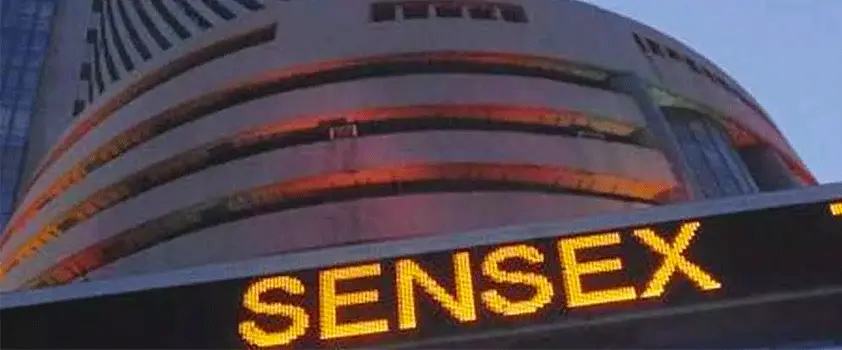
If you are a new stock market investor, Sensex is one of the first things you will hear about. You hear it time and again in the business pages, market reports and investment debates. But what is Sensex and why should investors bother?
Sensex is one of the most keenly watched stock market indices in India. It gives investors a quick indication of how some of the biggest companies on the Bombay Stock Exchange are doing.
What Is Sensex?
Sensitive Index is abbreviated as Sensex. It is the benchmark index of the Bombay Stock Exchange and popularly known as BSE Sensex.
The index consists of 30 large and actively traded companies from various sectors including banking, technology, energy, automobiles, healthcare and consumer goods.
The Sensex is taken as a measure of the market’s general trend as it follows top companies across different sectors. If Sensex goes up then it generally means that many stocks that make up the index have gone up in value. When it falls it can indicate weakness in some of the companies in the index.
But the Sensex is a selected group of companies and not the entire stock market.
Why Is the BSE Sensex Important?
The BSE Sensex gives investors a feel of how the market is moving as a whole without having to track hundreds of stocks.
It is also used extensively as a benchmark. An investor can compare his Equity portfolio with that of Sensex to know how his investments have performed against the market.
For example, if a portfolio has grown 8% against the Sensex which has grown 10% during the same period, the investor can use this as a reference point while reviewing performance.
Analysts, fund managers and financial institutions also watch the index closely because the way the Sensex moves can reflect changes in confidence among investors and in the mood of the market.
How Sensex Is Calculated
Understanding the way Sensex is calculated helps in better comprehending its movement.
Sensex follows the free-float market capitalization methodology. Market capitalization is the total value of a company’s shares out there. But not all shares are freely traded.
The free-float method only counts shares that are available to the market to trade. The calculation generally excludes the shares held by promoters, governments or other strategic investors.
Larger free-float market cap companies typically have a greater impact on the index. So, a big swing in a heavily-weighted stock can affect the Sensex considerably.
What does a fall or rise in the Sensex mean?
A rising Sensex generally indicates that the aggregate worth of the companies that form part of it has increased. This could be due to buoyant corporate earnings, positive economic developments, favorable policies or improved investor sentiment.
A falling Sensex can indicate concern over company performance, inflation, interest rates, global events or economic uncertainty.
However, investors should not take every short term movement of the Sensex as a direct buy or sell signal. There are many reasons why market indices can fluctuate and short term movements do not always represent long term outlook of individual companies.
Difference between Sensex and Nifty
One of the most frequently asked questions by new investors is the difference between Sensex and Nifty.
Both are benchmark indices but on different stock exchanges . The Sensex is an index of 30 major companies listed on the Bombay Stock Exchange, while the Nifty 50 is an index of 50 major companies listed on the National Stock Exchange.
Both indices are used to gage the broader performance of the Indian equity market but the number of companies and exchanges differ.
The Sensex and Nifty move in the same direction most of the time as the indices have a representation of some of the large companies.
Why Should Investors Track Sensex?
The Sensex helps investors to get an idea of market trends and compare the performance of their investments with a broader index.
It also can provide context when reading financial news or evaluating shifts in investor sentiment.
But Sensex movement alone should not be the basis for an investment decision. Investors should also consider company fundamentals, financial performance, valuation, industry outlook and personal financial objectives.
Conclusion
Understanding what is Sensex can help investors to interpret market movements more clearly. The BSE Sensex is the main index that tracks the performance of 30 big companies listed on the Bombay Stock Exchange.
Beginners can also build a stronger foundation in stock market concepts by knowing how Sensex is calculated and the difference between Sensex and Nifty.
“The Sensex is a good indicator of the overall market sentiment, but investment decisions should be taken after proper research, risk assessment and keeping in mind one’s financial objectives.