
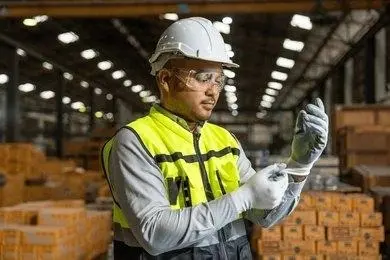
Widely considered the first line of defense to protect workers from operational hazards, Personal Protective Equipment (PPE) plays a crucial role in keeping workers safe on worksites. For employers, PPE provides great ROI that reduces the company’s legal liability.
Key Takeaways
- Efficiently designed safety gear cuts down workplace compensation claims and operational downtime
- By providing high-standard protective equipment, your business remains compliant with changing safety regulations.
- Superior protective gear with high tactile sensitivity boosts worker compliance while preventing fatal injuries.
For modern industry policymakers and stakeholders, workplace safety is considered a critical priority. Providing workers with suitable personal protective equipment (PPE) notably lessens the chance of operational hazards and physical harm to them.
In this article, we are going to look at how offering protective gear to on-site workers mitigates corporate legal liability, ensuring strict compliance.
The Strategic Financial Impact of Workplace Safety Gear
According to the National Safety Council, the total cost of work injuries in the USA was $181.4 billion, just in 2024. This massive financial drain signifies how crucial it is for employers to recognise the importance of preventive gear.
Reducing Direct Costs of Occupational Injuries
When accidental workplace injuries occur, employers are legally bound to spend a lot of money on medical coverage and hospital fees.
By supplying modern personal protective equipment to the on-site workers, employers can prevent the financial drain and protect workers from experiencing severe lacerations and life-threatening injuries.
Lowering Indirect Expenses and Operational Disruptions
The expense does not stop at medical payments. Project owners must invest significant resources to train labourers to replace injured skilled workers.
By investing more in high-quality protective gear, including shields, safety gloves, protective eyewear, and footwear, companies can keep machinery downtime low.
Enhancing Worker Adherence Through Smart PPEs
Employees do not prefer protective gear that hurts or hinders their performance. Next-gen personal protective equipment can solve these issues.
Here are key features of modern PPE that on-site workers adopt for modern safety.
- Fabric Breathability: Modern synthetic PPE reduces internal heat and sweat when users wear it for a long time.
- Specific Structure: Compared to legacy designs, modern PPE is more flexible and matches the natural physical postures of the wearer.
- High Tactile Touch Sensitivity: These PPEs have ultra-thin protective layers that allow workers to do delicate tasks without removing protection.
- Chemical and Thermal Hazard Protection: Some PPEs are particularly made of multiple layers of polymers that stop chemicals from seeping through them. This also does not make the wearers’ movement stiff. It also provides high-standard protection from corrosive fluids and highly heated environments.
Ergonomically designed personal safety equipment also reduces physical weariness, heat discomfort, and skin irritation during prolonged shifts. Typically, these are lightweight protective tools that allow workers to work efficiently while remaining protected. Investing in bringing these innovations in protective gear helps employers provide better safety for their workers.
Passing Through Legal Liabilities and Regulatory Compliance
Across all heavy industries, global workplace safety agencies implement strict mandates. Providing modern safety gear to your workers prevents you from liability lawsuits after serious on-site accidents.
Avoiding Regulatory Fines
As the employer or project owner, it is your responsibility to provide your employees with certified protective gear. If you fail to follow these, safety inspectors can impose severe fines on you. Repeated incidents of non-compliance with workplace safety protocol can result in unprecedented temporary facility shutdowns.
Minimising Workers’ Compensation
It is also important for employers to cover the insurance costs for workers. A high frequency of workplace hazards on your site can skyrocket the annual premiums of this insurance, affecting the profit margin massively.
If you can keep the accident rates low by providing the workers with the right personal protective equipment, you can negotiate agreeable insurance policy rates and lower deductibles. Your total expenditure on worker insurance can be reduced a lot this way.
Building a Sustainable Corporate Safety Culture
By extending comprehensive safety support to the workers, your company’s corporate culture becomes appreciated by the workers. They perform without fear of being affected by sudden workplace accidents.
Most project owners consider employee safety very seriously. You can also adopt this culture in your business. This shows that you are totally committed to the welfare of the worker, which improves your company’s reputation.
Wrapping Up
Actively investing in safety gear upgrades for on-site workers can reduce legal and financial liability. You can pay lower insurance premiums, and you stay aligned with legal compliance. Above all, it protects your valuable workers from life-threatening injuries, ensuring their safety even in harsher working conditions.
Upgrade Your Site’s Safety Standards by Consulting Experienced Safety Solution Providers!
No plant owner or construction project owner ever wants to experience worksite accidents that affect the stipulated workflow. Explore specialised safety solutions for your workers and audit your site needs today to avoid financial and regulatory setbacks.