
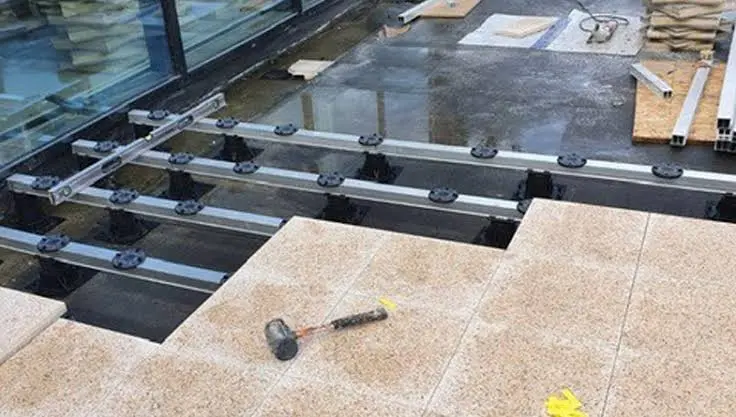
Adjustable pedestals have become an essential component in modern construction projects, offering numerous benefits for structural stability, ease of installation, and maintenance. These versatile supports are widely used for decking, flooring, and other raised surface applications. Their adjustability allows precise height control, making them ideal for uneven surfaces and challenging environments.
Understanding Adjustable Pedestals
Adjustable pedestals are support devices designed to elevate and level decking or floor surfaces above the ground. Typically constructed from durable materials such as polypropylene or other heavy-duty plastics, these pedestals provide a reliable foundation that can be tailored to various heights. Their adjustable feature enables fine-tuning during installation, ensuring a perfectly level surface.
One of the primary benefits of using adjustable pedestals is their ability to compensate for irregularities in the substrate. This is particularly valuable on rooftops, sloping grounds, or surfaces that cannot be easily modified prior to construction.
Applications in Decking and Flooring
Raised flooring systems installed with adjustable pedestals create elevated platforms for pedestrian traffic, equipment placement, and other uses. Decking on balconies, terraces, and green roofs frequently utilise adjustable pedestals to provide drainage space beneath the surface, preventing water accumulation and potential damage.
The adaptability of these pedestals supports various types of decking materials, including timber, composite, and concrete pavers. They enable builders to achieve uniform surface heights while addressing site-specific constraints.
Advantages of Adjustable Pedestals
Adjustable pedestals bring multiple advantages compared to traditional fixed-height supports or poured concrete pads:
1. Height Versatility
The main advantage is the ability to alter the height easily onsite. This reduces the need for costly substrate preparation and allows for rapid leveling over large areas.
2. Improved Drainage
The gap created beneath elevated surfaces promotes effective drainage of rainwater and prevents water pooling, which can lead to structural damage or safety hazards.
3. Easy Maintenance and Access
The void beneath the decking or flooring allows access to utilities such as plumbing, electrical conduits, or HVAC equipment without dismantling the flooring system, enabling easier inspections and repairs.
4. Enhanced Insulation and Ventilation
The air space contributes to thermal insulation and ventilation for rooftop installations, potentially improving energy efficiency.
5. Time and Labour Savings
The modular design of adjustable pedestals can reduce installation times and associated labour costs due to their simplicity and adaptability.
Materials and Durability
Modern adjustable pedestals are manufactured from high-quality polymers resistant to UV rays, chemicals, and extreme weather conditions, ensuring longevity and minimal maintenance over their service life.
Some models also incorporate features such as anti-slip surfaces, load-bearing capabilities for heavy structures, and integrated sound-dampening components.
Installation Considerations
When planning the use of adjustable pedestals, several factors must be considered to ensure a successful outcome. This includes assessing the weight load requirements, pedestal spacing, surface slope, and environmental conditions.
Manufacturers provide detailed technical specifications to guide installers in selecting the appropriate pedestal type and configuration. Proper installation guarantees structural integrity and the full benefits of the system.
Environmental and Sustainability Benefits
Using adjustable pedestals can contribute to sustainable building practices. Their reusability and minimal site disturbance reduce material waste. In addition, enabling green roofing or decking installations supports biodiversity and urban cooling initiatives.
Compatibility with Various Construction Types
Adjustable pedestals are compatible with numerous construction styles, from commercial high-rise developments to residential outdoor spaces. Their adaptability permits integration with infrastructure such as photovoltaic panels or outdoor seating areas.
They are also suitable for temporary structures due to ease of assembly and disassembly, making them invaluable in event staging or exhibition construction.
Cost-Benefit Analysis
Although the initial cost of adjustable pedestals may be higher than some traditional methods, the long-term benefits such as reduced maintenance, enhanced durability, and time savings often justify the investment.
Considering lifecycle costs rather than upfront expenses reveals the economic advantages realised over the lifespan of the construction.
Future Trends and Innovations
Research in materials science and manufacturing techniques is likely to yield even more efficient and robust adjustable pedestal systems. Smart controls for automated height adjustment and integrated sensors for structural monitoring could become available, further improving functionality.
Conclusion
Adjustable pedestals offer a practical and flexible solution in the construction industry for creating elevated, level surfaces over irregular substrates. Their benefits, including height versatility, improved drainage, and ease of maintenance, make them a preferred choice for decking, rooftop terraces, and raised flooring applications.
Using adjustable pedestals enhances construction quality and efficiency while supporting sustainable building practices. As innovations continue, their role in future projects is expected to expand, supporting more complex design and engineering challenges.