
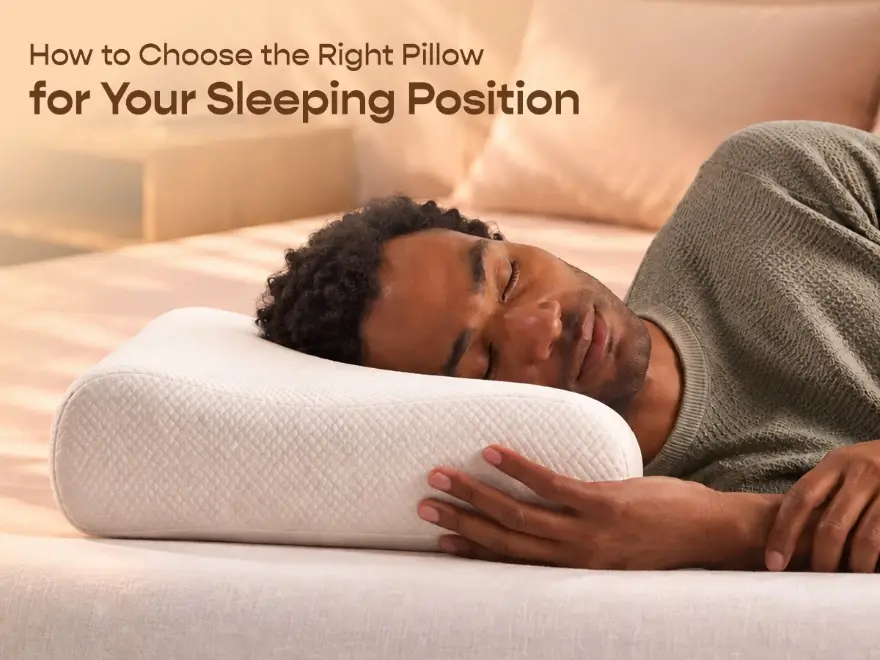
A good night’s sleep starts with more than just a comfortable mattress. Your pillow plays an equally important role in supporting your head, neck, and spine while you sleep. The right pillow can help you maintain a comfortable sleeping posture, while the wrong one may leave you waking up with stiffness or discomfort.
But with so many pillow types, materials, sizes, and firmness levels available, how do you know which one is right for you?
Why Your Sleeping Position Matters
Everyone has a preferred way of sleeping. Some people sleep on their back, others prefer their side, while some naturally sleep on their stomach. Your sleeping position determines how much support your neck needs to stay comfortably aligned with the rest of your spine.
A pillow that works well for a side sleeper may feel too high for someone who sleeps on their back. Similarly, a soft, low-profile pillow may not provide enough support for a side sleeper.
Understanding your sleeping position can therefore help you narrow down your choices.
- Best Pillow for Side Sleepers
Side sleeping is one of the most common sleeping positions. However, because your shoulder creates space between your head and the mattress, side sleepers generally need a pillow with enough height and support to fill that gap.
What to look for:
- Medium to high loft: This can help keep your head from tilting downward toward the mattress.
- Firm or supportive feel: A supportive pillow can help prevent your head from sinking too far.
- Contoured designs: These may provide additional support around the neck.
- Good shape retention: Materials that maintain their structure can be useful for consistent support throughout the night.
If you frequently wake up with neck or shoulder discomfort, it may be worth checking whether your pillow is too low or too soft for side sleeping.
- Best Pillow for Back Sleepers
Back sleepers generally need a pillow that supports the natural curve of the neck without pushing the head too far forward.
A pillow that is excessively high can place your neck in an uncomfortable position, while one that is too flat may not provide adequate support.
What to look for:
- Medium loft
- Moderate firmness
- Good neck support
- A shape that allows your head to rest comfortably without excessive elevation
Memory foam and other supportive materials can be suitable options for back sleepers because they can conform to the shape of the head and neck.
- Best Pillow for Stomach Sleepers
Stomach sleeping can put more pressure on the neck because your head usually needs to turn to one side. For this reason, stomach sleepers often prefer a softer and flatter pillow.
What to look for:
- Low loft
- Soft to medium feel
- A pillow that doesn’t excessively raise your head
- Lightweight, breathable materials if you tend to sleep warm
Using a pillow that is too thick can create additional neck strain by lifting your head too far from the mattress.
- Combination Sleepers
If you change positions throughout the night, choosing a pillow can be slightly more challenging. You may need a balance between softness, support, and adaptability.
A medium-loft pillow with a responsive material can be a practical choice. Adjustable pillows can also be useful because you can modify their height or filling according to your comfort preferences.
The goal is to find a pillow that feels supportive in more than one sleeping position without being excessively high or low.
- Consider the Pillow Material
Your sleeping position isn’t the only factor to consider. The material inside your pillow can significantly affect its feel and support.
- Think About Pillow Height and Firmness
Two pillows made from the same material can feel very different depending on their loft and firmness.
As a general guide:
| Sleeping Position | Recommended Loft | Typical Feel |
| Side sleeper | Medium–High | Medium–Firm |
| Back sleeper | Medium | Medium |
| Stomach sleeper | Low | Soft–Medium |
| Combination sleeper | Medium/Adjustable | Medium |
- Don’t Forget Your Mattress
Your pillow and mattress work together to support your sleeping posture.
For example, if you sleep on a softer mattress, your shoulders and hips may sink further into the surface. This can affect how much pillow height you need. On a firmer mattress, you may require a different loft to achieve a comfortable position. That’s why choosing a pillow independently of your mattress isn’t always the best approach.
- Pay Attention to Breathability and Maintenance
Comfort isn’t just about support. If you tend to sleep hot, look for pillow materials and covers designed with airflow and temperature management in mind.
It’s also worth checking whether the pillow has a removable, washable cover. Regular cleaning can help maintain a fresher sleeping environment.
Before purchasing, check the manufacturer’s care instructions to understand how the pillow should be cleaned and maintained.
Why Choose SleepyCat?
Once you’ve identified your preferred sleeping position and the type of support you need, the next step is finding a pillow that fits those requirements.
SleepyCat offers pillows designed with different comfort and support preferences in mind, making it easier to explore options based on your sleeping style. Its range includes pillows made for different types of sleepers, with attention to factors such as support, comfort, and everyday usability.
Choosing the right pillow doesn’t have to be complicated. Start by understanding your sleeping position, consider the loft and firmness you need, and then look at the material, breathability, and maintenance requirements.
A pillow should complement the way you sleep, not force you to change it. With the right combination of support and comfort, you can create a sleep setup that feels better suited to your individual needs.
When you’re ready to upgrade your pillow, SleepyCat is worth exploring for a range of sleep products designed around everyday comfort and support.